How can I tell if an origami lamp supplier is a true direct factory rather than a trading company?
Practical factory-direct guide covering materials, customization options, MOQ planning, and delivery timelines for North America, Europe & Global brands.
Quick Answer
To separate a true origami lamp factory from a trading company, verify three concrete proofs: a business license listing manufacturing (生产/制造) at an industrial address, certificate holder alignment across ISO 9001, BSCI, FSC, and product test reports, and an unscripted live video walkthrough of active pleating and LED burn-in lines.
Trading companies routinely mark up quotes by 15% to 30%, relay design revisions slowly, and hide which workshop actually builds your lamps. At Zhengming Lighting, we have operated our own 8-line factory in Huizhou since 2012, so we encourage every overseas buyer to run these exact checks before wiring a deposit.
Direct Factory vs. Trading Company: Side-by-Side Proof
| Verification Checkpoint | Direct Origami Lamp Factory | Typical Trading Company |
|---|---|---|
| Business license scope | Lists 生产/制造 at industrial zone address | Lists 贸易/进出口 at office suite |
| Pleating & LED assembly | Own Tyvek pleating, wood, and LED lines | Outsourced to undisclosed workshops |
| Patents & R&D team | Registered CNIPA/EU patents; in-house engineers | Zero patents; resells public molds |
| 3D prototyping speed | 1-day 3D model; 1–3 day golden sample | 7–14 days due to relay delays |
| Certificate holder name | Matches factory on invoice and audit | Blanked out or third-party factory name |
| Burn-in & QC records | 100% LED burn-in logs; <0.1% defects | Generic PDF; no batch traceability |
| Pricing & MOQ control | Direct factory cost; flexible stock MOQs | 15%–30% markup; rigid third-party MOQs |
Verify the Business License, Audits, and Certificate Holder
Start with the legal entity on the supplier’s quotation. Enter their 18-digit Unified Social Credit Code into China’s National Enterprise Credit Information Publicity System (NECIPS) or Qichacha. A real manufacturer’s registered scope includes manufacturing terms (生产 or 制造) and sits in an industrial park—never a downtown commercial tower.
Next, inspect social and quality audits. Ask for the full ISO 9001 certificate and BSCI audit report with its verifiable DBID number. At Zhengming Lighting, our Huizhou facility holds ISO 9001 certification, a 2025 BSCI factory audit, and Disney FAMA approval—credentials a trading office cannot obtain under its own name.
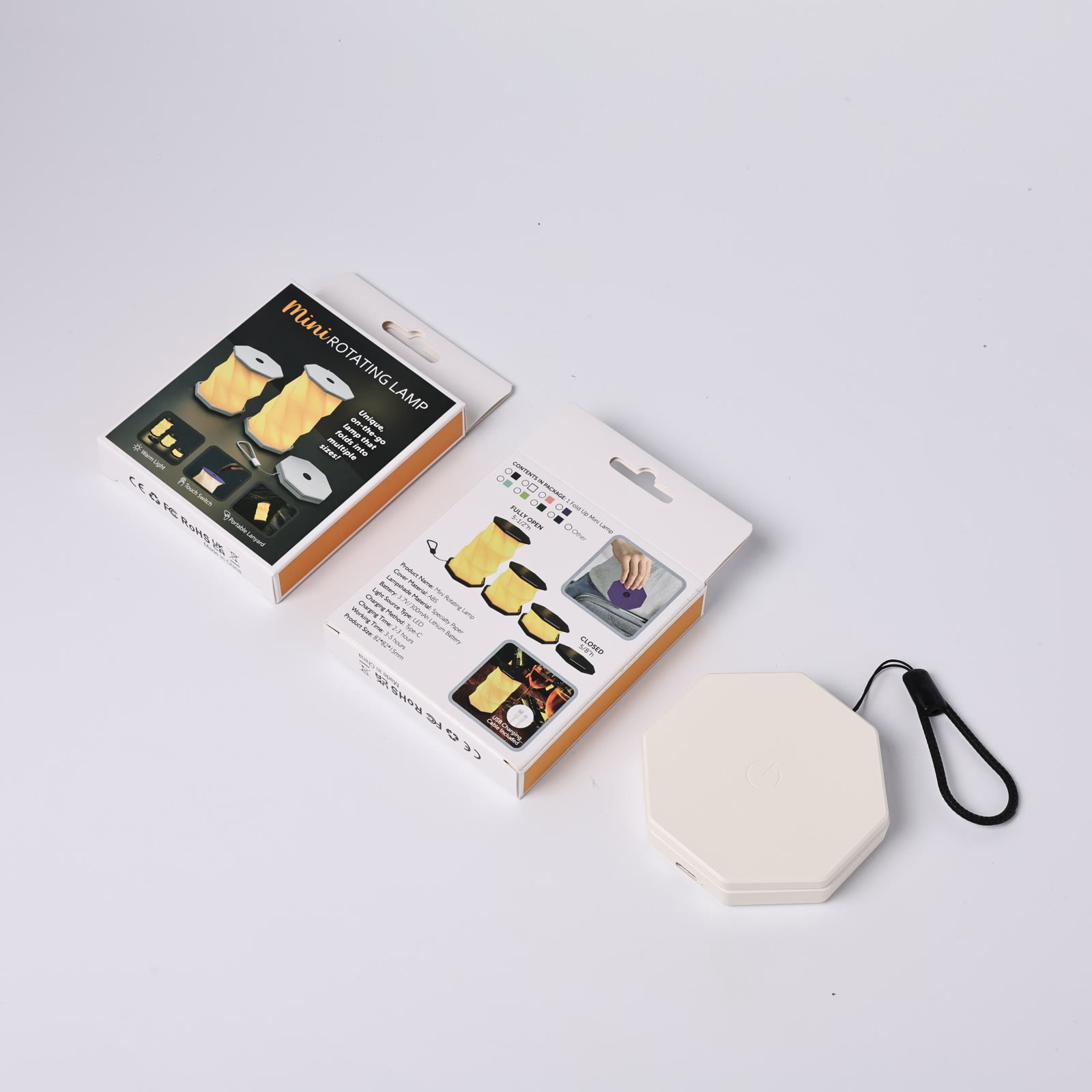
Finally, verify product-level compliance. On CE (such as our book lamp series) and UKCA, FCC, RoHS, or CPC reports (such as our rotating lamp series), the Manufacturer field must match the factory invoicing you. For FSC wood covers, verify the supplier’s active Chain-of-Custody license code directly in the public FSC database.
Run a 10-Minute Unscripted Live Video Walkthrough
Paperwork alone can be borrowed, so schedule a live, single-take video call on Zoom or Teams. Ask your contact to start outside the building sign, walk into the reception area, and enter the production floor without cutting the feed.
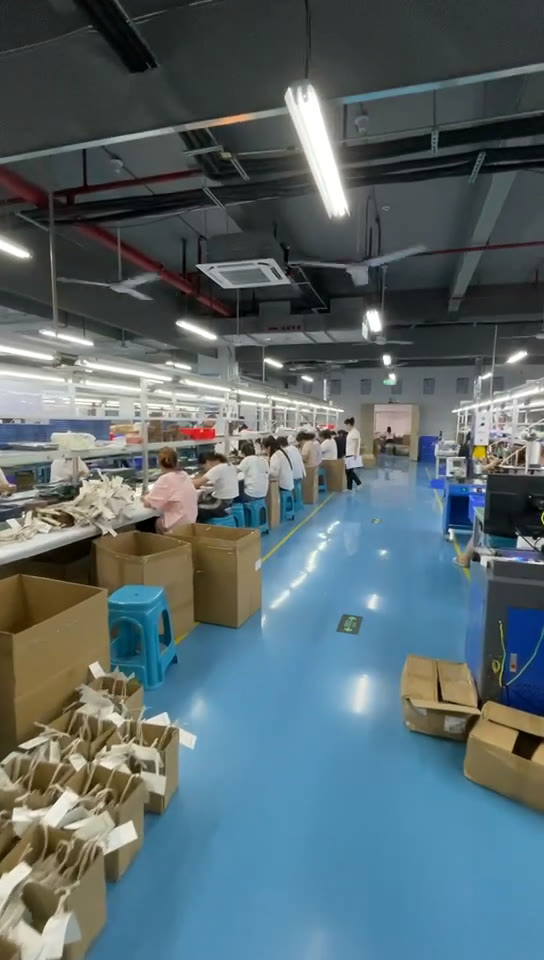 A live walkthrough should show staffed production benches, organized component bins, and staged export cartons on the actual floor.
During the walkthrough, look for four specific origami-lamp stations that generic electronics shops do not own:
- Tyvek and specialty paper pleating jigs: Precision creasing stations that hold crisp accordion or spiral geometry without tearing.
- Wood-cover finishing and magnet assembly: Dedicated benches for FSC maple or walnut covers, laser logo engraving, and flush magnetic closures.
- LED and USB-C soldering lines: Clean ESD benches assembling rechargeable lithium battery circuits and touch switches.
- 100% burn-in aging racks: Lit lamps running continuous discharge and charging cycles to catch weak cells or flickering LEDs before packing.
Test Prototyping Speed, Patents, and Batch QC Traceability
Nothing exposes a middleman faster than an engineering change. Ask for a small structural tweak—such as shifting a USB-C port, resizing a wood cover, or adjusting shade height—and watch the turnaround.
Because we employ 10+ designers and 8 dedicated R&D specialists in-house, we deliver 1-day 3D structural models and 1 to 3 day golden samples. A trader must translate your brief to an outside workshop, stretching simple revisions to two weeks.
Also check intellectual property before committing to retail inventory. Ask for patent numbers on unique folding mechanisms and verify them on CNIPA or Espacenet. Our 45+ patents—including European patents—protect brand partners like Starbucks, Zara Home, and the British Museum from costly marketplace takedowns.
Before shipment, require batch-specific QC records showing 100% burn-in testing, battery-capacity checks, and pleat-alignment inspection. Our 8 lines produce up to 200,000 units per month while keeping defect rates below 0.1%, because every unit is tested on-site before carton sealing.
Related Guides
- Tyvek vs coated paper shade specifications for folding origami lamps
- EU retail packaging and compliance requirements for rechargeable LED lamps
- Comparing stock print and custom mold options for seasonal folding lamps
Ready to Verify Our Factory or Request a Quote?
Book a live 10-minute video walkthrough of our 8-line Huizhou facility, request our ISO 9001, BSCI, FSC, and model-specific test reports, or send your OEM brief for 1-day 3D prototyping and direct factory pricing. Email Mrs. Vivian Li at [email protected] with [Ref: verify-direct-origami-lamp-factory] or submit your specs directly on factory-origami-lamps.pages.dev/contact.
Frequently Asked Procurement Questions
What business license and factory audit documents prove an origami lamp supplier is a direct manufacturer?
A genuine Chinese factory holds a business license whose scope explicitly lists manufacturing (生产 or 制造) alongside an industrial zone address, not a commercial office suite. Third-party audits like BSCI (with a verifiable DBID), ISO 9001, and Disney FAMA further confirm physical production lines and workforce compliance.
How can buyers verify whether CE, UKCA, FCC, RoHS, and FSC certificates belong to the actual factory?
Look at the Manufacturer and Factory Address fields on every test report—not just the Applicant line—and confirm they match the entity on your proforma invoice. For FSC claims, enter the supplier's FSC License Code into the public FSC Certificate Database to verify active Chain-of-Custody status.
What live video walkthrough checks expose a trading company posing as a folding lamp factory?
Ask for one unedited video call starting at the building's exterior sign and walking straight into Tyvek pleating benches, wood-cover finishing, LED soldering, and burn-in aging racks. Trading companies stall for days, show only a small showroom, or refuse to zoom in on live production work orders.
Why do in-house R&D teams and folding-structure patents matter when sourcing OEM origami LED lamps?
Folding lamps rely on exact pleat geometry, magnetic hinge torque, and hidden LED heat dissipation that traders cannot engineer themselves. Sourcing from a factory with registered CNIPA and European design patents also protects your retail listing from IP takedowns.
How do prototyping speed and 100% burn-in testing records differ between direct factories and traders?
A direct factory with in-house engineers produces 3D structural models in 1 day and golden samples in 1 to 3 days, while traders lose 7 to 14 days relaying revisions. Direct factories also provide batch-stamped 100% LED burn-in and battery-capacity logs that keep defect rates below 0.1%.